Within Duluth Flap
What Did Duluth's F 89 Really Track?
The 1955 Duluth interception was a genuine military radar event, but uncertain tracking geometry and equipment behaviour weaken exotic claims.
On this page
- The crew's four minute radar pursuit
- Why the speed and altitude estimates are uncertain
- How Project Blue Book judged the evidence
Page outline Jump by section
Introduction
The May 1955 F-89 radar incident remains one of the strongest documented UFO-related cases in Minnesota because it involved a military interceptor, trained aircrew and airborne radar rather than a brief civilian sighting. Yet the same records that make the case noteworthy also show why it is difficult to treat as evidence of an extraordinary craft. The Duluth-based crew genuinely tracked an unknown radar target for several minutes, and Air Force specialists could not confidently identify what produced the return. At the same time, uncertainties in radar geometry, target range, altitude estimates and relative motion make the more dramatic claims about impossible speeds far less secure than later retellings often suggest.[govweird]govweird.comduluth mn may 1955Project Blue Book: Duluth, Minnesota, May 1955 · govweirdMay 1, 1955 — On the night of May 13, 1955, two Air Force pilots flying…
Within Minnesota’s Cold War UFO history, the incident is important not because it proves anything exotic, but because it illustrates the limits of 1950s air-defence technology. A real military radar event occurred, an interceptor was directed towards it, and investigators were left with an unresolved file rather than a convincing explanation.[govweird]govweird.comduluth mn may 1955Project Blue Book: Duluth, Minnesota, May 1955 · govweirdMay 1, 1955 — On the night of May 13, 1955, two Air Force pilots flying…
What Did Duluth’s F-89 Really Track?
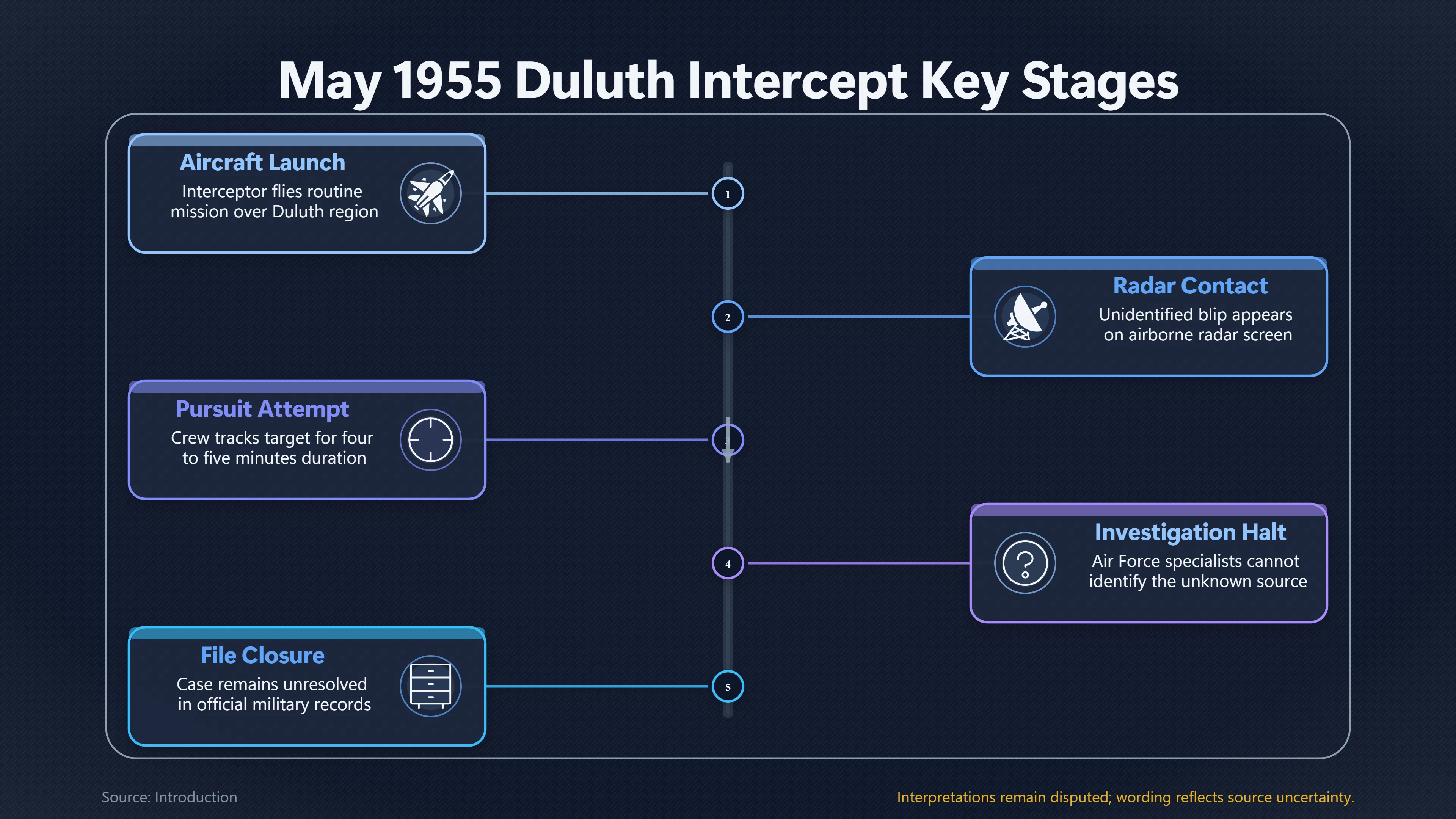
In the early hours of 13 May 1955, an F-89D Scorpion interceptor operating from Duluth was flying a routine mission with pilot Lieutenant Charles M. Middleton and radar observer Lieutenant Donald G. Fisher. Around 2:30 a.m., the aircraft’s radar acquired a target that neither crew member could identify. According to the Project Blue Book file, the radar contact remained visible long enough for the crew to attempt an interception and track it for roughly four to five minutes.[govweird]govweird.comduluth mn may 1955Project Blue Book: Duluth, Minnesota, May 1955 · govweirdMay 1, 1955 — On the night of May 13, 1955, two Air Force pilots flying…
The F-89 was not a simple fighter. It had been designed as an all-weather interceptor for Cold War air defence and carried radar specifically intended to locate and engage aircraft in darkness or poor weather. A radar return on such an aircraft therefore attracted serious attention, especially during a period when unidentified tracks could potentially represent hostile aircraft.[War Thunder Wiki]wiki.warthunder.comWar Thunder WikiF-89DThe F-89D Scorpion was designed and built to be an all-weather interceptor intended to neutralize any potential inva…
What made the incident unusual was that the target appeared to behave inconsistently. As the interceptor manoeuvred, the radar contact seemed at times to change altitude, direction and relative position. In some descriptions it appeared nearly stationary; in others it seemed to move away rapidly. Those apparent changes later became the basis for claims that the object displayed extraordinary performance.[govweird]govweird.comduluth mn may 1955Project Blue Book: Duluth, Minnesota, May 1955 · govweirdMay 1, 1955 — On the night of May 13, 1955, two Air Force pilots flying…
The Crew’s Four-Minute Radar Pursuit
The key fact is that the crew reported a radar target, not a prolonged visual observation. The strength of the case lies in the instrument detection; its weakness is that the available information comes primarily from interpreting radar behaviour rather than watching a clearly visible object.[govweird]govweird.comduluth mn may 1955Project Blue Book: Duluth, Minnesota, May 1955 · govweirdMay 1, 1955 — On the night of May 13, 1955, two Air Force pilots flying…
During the pursuit, the interceptor attempted to close on the contact. Investigators later reconstructed the encounter from crew testimony and radar information, but they lacked the sort of detailed electronic recording that modern systems routinely generate. As a result, estimates of the target’s movement depended heavily on assumptions about where the object actually was relative to the aircraft at different moments.[govweird]govweird.comduluth mn may 1955Project Blue Book: Duluth, Minnesota, May 1955 · govweirdMay 1, 1955 — On the night of May 13, 1955, two Air Force pilots flying…
This distinction matters. If range, bearing or altitude are only approximately known, then small errors can produce very large differences in calculated speed. A target interpreted as moving hundreds of miles in a short period may instead reflect uncertainty in the geometry of the intercept. That possibility became central to later assessments of the case.[govweird]govweird.comduluth mn may 1955Project Blue Book: Duluth, Minnesota, May 1955 · govweirdMay 1, 1955 — On the night of May 13, 1955, two Air Force pilots flying…
Why the Speed and Altitude Estimates Are Uncertain
Many summaries of the Duluth incident emphasise reports that the target accelerated to remarkable speeds. The problem is that those figures were not directly measured in the way modern radar systems measure velocity. They were inferred from estimated positions during a short and complex intercept.[govweird]govweird.comduluth mn may 1955Project Blue Book: Duluth, Minnesota, May 1955 · govweirdMay 1, 1955 — On the night of May 13, 1955, two Air Force pilots flying…
Several factors complicate the calculation:
- Range uncertainty: If investigators do not know the target’s exact distance, they cannot determine its true speed with confidence.
- Relative motion effects: An interceptor turning, climbing or changing heading can create misleading impressions of a target’s movement on radar.
- Altitude ambiguity: Errors in estimating height can alter reconstructed flight paths dramatically.
- Radar behaviour: Early airborne radar systems could produce returns that were difficult to interpret, particularly when tracking weak or unusual contacts.[govweird]govweird.comduluth mn may 1955Project Blue Book: Duluth, Minnesota, May 1955 · govweirdMay 1, 1955 — On the night of May 13, 1955, two Air Force pilots flying…
Because of these uncertainties, the dramatic performance figures sometimes associated with the encounter should be treated cautiously. The records support the claim that an unidentified radar target was tracked. They do not provide a secure basis for concluding that a craft demonstrably exceeded known aviation capabilities.[govweird]govweird.comduluth mn may 1955Project Blue Book: Duluth, Minnesota, May 1955 · govweirdMay 1, 1955 — On the night of May 13, 1955, two Air Force pilots flying…
This is one reason the case has survived scrutiny better than many UFO stories while still failing to establish an extraordinary conclusion. The evidence is too substantial for a simple dismissal, but too ambiguous for confident claims about what the target actually was.
How Project Blue Book Judged the Evidence
Project Blue Book reviewed the incident and did not reach a firm identification. Rather than classifying the event as a solved case, investigators concluded that the available information was insufficient to determine exactly what had been tracked. The case therefore entered the category of unresolved reports rather than confirmed aircraft, weather phenomena or astronomical objects.[govweird]govweird.comduluth mn may 1955Project Blue Book: Duluth, Minnesota, May 1955 · govweirdMay 1, 1955 — On the night of May 13, 1955, two Air Force pilots flying…
That outcome is significant. Blue Book often attempted to explain reports through known causes, and later critics accused the programme of favouring conventional explanations whenever possible. Yet in the Duluth case the Air Force specialists did not claim certainty. The surviving file reflects an inability to reconstruct the encounter with enough confidence to identify the target.[govweird]govweird.comduluth mn may 1955Project Blue Book: Duluth, Minnesota, May 1955 · govweirdMay 1, 1955 — On the night of May 13, 1955, two Air Force pilots flying…
An unresolved classification, however, is not the same as validation of an exotic hypothesis. It means only that the evidence failed to support a definite explanation. The Air Force’s broader position throughout Project Blue Book was that unexplained cases did not constitute proof of advanced non-human technology.[National Archives]archives.govNational Archives Public Interest in UFOs Persists 50 Years After Project BlueNational ArchivesPublic Interest in UFOs Persists 50 Years After Project Blue…December 4, 2019 — 5 Dec 2019 — Project Blue Book ultima…

Why the Case Still Matters in Minnesota UFO History
The 1955 Duluth radar encounter occupies an unusual place in Minnesota’s UFO record because it sits between two extremes. It was not a simple anecdotal sighting, and it was not a conclusively documented encounter with a known object. Instead, it was a genuine military intercept involving trained personnel, specialised equipment and an official investigation that could not produce a satisfactory answer.[govweird]govweird.comduluth mn may 1955Project Blue Book: Duluth, Minnesota, May 1955 · govweirdMay 1, 1955 — On the night of May 13, 1955, two Air Force pilots flying…
For historians of the state’s Cold War UFO era, the case demonstrates how air-defence systems could generate authentic mysteries without requiring extraordinary explanations. The radar contact was real enough to trigger concern and analysis, yet the available data were insufficient to determine exactly what happened. That combination of credible observation and persistent uncertainty explains why the 1955 F-89 incident remains one of Minnesota’s most discussed military UFO cases.[govweird]govweird.comduluth mn may 1955Project Blue Book: Duluth, Minnesota, May 1955 · govweirdMay 1, 1955 — On the night of May 13, 1955, two Air Force pilots flying…
Amazon book picks
Further Reading
Books and field guides related to What Did Duluth's F 89 Really Track?. Use these as the next step if you want deeper reading beyond the article.
The Report on Unidentified Flying Objects
Directly relevant to military UFO investigations and official case analysis.
The UFO Experience: A Scientific Inquiry
Useful for understanding radar and observational uncertainty.
UFOs: Generals, Pilots, and Government Officials Go on the Re...
Emphasizes pilot and military witness testimony.
eBay marketplace picks
Marketplace Samples
Live-tested eBay searches with available results related to this page.
Selected fromF-89 Scorpion model oneBay.co.uk.
Related eBay result
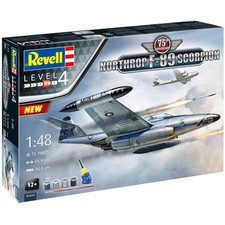
Revell 1/48 Model Aircraft Northrop F-89 Scorpion Kit 05650
Related eBay result
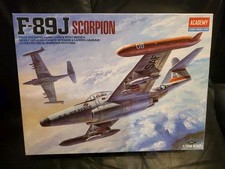
Academy Northrop F-89J Scorpion 1/72nd scale model kit. BNIB


Endnotes
1.
Source: govweird.com
Title: duluth mn may 1955
Link:https://www.govweird.com/topics/ufo/project-blue-book/duluth-mn-may-1955
Source snippet
Project Blue Book: Duluth, Minnesota, May 1955 · govweirdMay 1, 1955 — On the night of May 13, 1955, two Air Force pilots flying...
Published: may 1955
2.
Source: archives.gov
Title: National Archives Public Interest in UFOs Persists 50 Years After Project Blue
Link:https://www.archives.gov/news/articles/project-blue-book-50th-anniversary
Source snippet
National ArchivesPublic Interest in UFOs Persists 50 Years After Project Blue...December 4, 2019 — 5 Dec 2019 — Project Blue Book ultima...
Published: December 4, 2019
3.
Source: wiki.warthunder.com
Link:https://wiki.warthunder.com/unit/f-89d
Source snippet
War Thunder WikiF-89DThe F-89D Scorpion was designed and built to be an all-weather interceptor intended to neutralize any potential inva...
4.
Source: Wikipedia
Title: Project Blue Book
Link:https://en.wikipedia.org/wiki/Project_Blue_Book
Source snippet
Project Blue BookIn 1955, the Air Force decided that the goal of Blue Book should not be to investigate UFO reports but to minimize th...
Additional References
5.
Source: facebook.com
Link:https://www.facebook.com/groups/RadarStationVeterans/posts/3460536387366129/
Source snippet
Project Blue Book air intercept radar caseNo visual sighting although the blips were indicated at ranges of 2, 3 1/2, and five miles. Sig...
6.
Source: af.mil
Title: unidentified flying objects and air force project blue book
Link:https://www.af.mil/About-Us/Fact-Sheets/Display/Article/104590/unidentified-flying-objects-and-air-force-project-blue-book/
Source snippet
Air ForceUnidentified Flying Objects and Air Force Project Blue BookOf a total of 12,618 sightings reported to Project Blue Book, 701 rem...
7.
Source: youtube.com
Link:https://www.youtube.com/watch?v=Pjoi_u3E9DA
Source snippet
The Super Rare Interceptor No One Wanted To See...
8.
Source: youtube.com
Title: The Creepy Missing F-89 Pilot
Link:https://www.youtube.com/watch?v=wZTYhwwq4tc
Source snippet
U.S. AIR FORCE AIR DEFENSE COMMAND F-89 SCORPION INTERCEPTOR 1950s PROMOTIONAL FILM 54094...
9.
Source: facebook.com
Link:https://www.facebook.com/HISTORY/posts/during-the-cold-war-as-project-blue-book-investigated-potential-ufo-threats-a-sh/1473622884330683/
Source snippet
of damage control...
10.
Source: academia.edu
Link:https://www.academia.edu/71337593/UFOs_and_the_extraterrestrial_contact_movement_a_bibliography
11.
Source: dokumen.pub
Link:https://dokumen.pub/conspiracies-and-secret-societies-the-complete-dossier-enhanced-credo-edition2nd-edition-9781578593682-1578593689-9781784024284-1784024287.html
12.
Source: archive.org
Link:https://archive.org/stream/pdfy-4vyHjooOJagoGAwN/Scientific%2BStudy%2BOf%2BUnidentified%2BFlying%2BObjects_djvu.txt
13.
Source: npshistory.com
Link:https://npshistory.com/publications/great-lakes-hcs.pdf
14.
Source: instagram.com
Link:https://www.instagram.com/reel/DagtEE1jeEC/