Within Oklahoma
Who Preserved Oklahoma's UFO Witness Stories?
Hayden Hewes built a civilian reporting network that preserved witness accounts and shaped how Oklahoma's UFO history reached the wider public.
On this page
- Building the International UFO Bureau
- Police, witnesses and media contacts
- Legacy, strengths and source limitations

Page outline Jump by section
Introduction
Hayden C. Hewes mattered to Oklahoma’s UFO history less because he solved sightings than because he created a civilian route by which witnesses could be heard, questioned and preserved. Beginning as a teenager in Oklahoma City in the late 1950s, he built an organisation that received tips from police and journalists, interviewed witnesses, circulated photographs, published reports and contacted government agencies. During Oklahoma’s major sighting wave of 1965, this network placed him close to patrol officers, newsrooms and several of the state’s best-known cases.[edmondlifeandleisure.com]edmondlifeandleisure.comEdmond Underground: in '65 Edmond abuzz with UCO sightingsEdmond Underground: in '65 Edmond abuzz with UCO sightings
That record is valuable but not neutral. Hewes helped save accounts that might otherwise have vanished, yet his publications openly entertained the idea that UFOs were interplanetary spacecraft. His files therefore preserve testimony and the assumptions of an enthusiastic civilian investigator at the same time. The right way to use his work is as an important historical archive—not as automatic proof that the objects reported over Oklahoma were extraordinary craft.
Building the International UFO Bureau
Hewes was born in 1943 and grew up in Oklahoma City. Local historical reporting says that he established his first UFO organisation in 1957, while still at school and only about 13 years old. Later accounts usually call it the International UFO Bureau, although surviving mid-1960s publications appeared under the longer name Interplanetary Intelligence of Unidentified Flying Objects, abbreviated IIOUFO. By the early 1970s, correspondence and reporting forms carried the name International UFO Bureau, or IUFOB.[edmondlifeandleisure.com]edmondlifeandleisure.comRemembering a man who investigated the unusualRemembering a man who investigated the unusual
The changing titles can make Hewes’s career appear more institutionally tidy than it was. This was not a government bureau, university laboratory or large professional research centre. It was a private civilian organisation run from Oklahoma City, supported by correspondents, volunteers and people interested in the subject. Even so, it developed a reach that was unusual for a young local investigator. Oklahoma Historical Society historian Larry O’Dell has described a network that included scientists, astronomers, university-connected members and correspondents outside the United States.[KOCO]koco.comOklahoma has decades-long history with UAP sightingsOklahoma has decades-long history with UAP sightings…
Its most visible publication was the Interplanetary Intelligence Report, a bimonthly bulletin edited by Hewes and William F. Riefer from 1965 into 1966. Surviving issues show how the organisation worked: witness narratives, sighting summaries, press cuttings, organisational news and criticism of official UFO investigations were gathered into a form that could circulate beyond Oklahoma. The journal’s stated outlook included demonstrating the possibility that UFOs were interplanetary vehicles, which is an important warning about editorial bias. Hewes was collecting data, but he was not approaching the subject without a preferred hypothesis.[iapsop.com]iapsop.comInterplanetary Intelligence Report [IAPSOPInterplanetary Intelligence Report [IAPSOP
The practical importance of the bulletin was nevertheless considerable. Local newspaper stories often disappeared into microfilm, private photographs could remain in family albums, and police sightings might never enter a permanent public file. By reprinting, corresponding and distributing copies, Hewes turned scattered incidents into a connected narrative of Oklahoma UFO activity. His organisation functioned as an informal clearing house at a time when there was no single accessible state archive for such reports.
Police, witnesses and media contacts
Hewes’s most useful innovation was not a particular theory but a communications network. Friends and contacts in police departments and the media alerted him when reports arrived, while witnesses were referred to his organisation for interviews. This gave him rapid access to incidents that might otherwise have been reduced to brief dispatch notes or sensational newspaper copy.[KOCO]koco.comOklahoma has decades-long history with UAP sightingsOklahoma has decades-long history with UAP sightings…
That system became especially important during the wave of sightings across Oklahoma at the end of July and beginning of August 1965. On 31 July, Hewes travelled to Wynnewood to interview police officer Lewis Sikes, who had reported a brightly lit object north-east of the town. On the following evening, television reporter Mike Buchanan telephoned Hewes after the Oklahoma Highway Patrol received numerous reports of unusual objects apparently moving towards Oklahoma City. Hewes then went to the patrol communications tower north of the city, where radio traffic allowed observers to follow incoming reports as they occurred.[edmondlifeandleisure.com]edmondlifeandleisure.comEdmond Underground: in '65 Edmond abuzz with UCO sightingsEdmond Underground: in '65 Edmond abuzz with UCO sightings
Hewes later said that he and six highway patrol officers watched a multicoloured light west of Oklahoma City while other patrol personnel near El Reno reported an object in their direction. He regarded the geographically separated observations as a “triangular fix”. That description is historically valuable because it identifies who was present and how Hewes understood the event. It is not, by itself, a technical triangulation: the surviving accounts do not provide the measured bearings, synchronized timings and calibrated instruments needed to calculate a reliable position or distance.[edmondlifeandleisure.com]edmondlifeandleisure.comRemembering a man who investigated the unusualRemembering a man who investigated the unusual
The episode illustrates both the strength and weakness of Hewes’s method. He was on the scene, speaking to officers and receiving reports through established communications channels rather than relying entirely on later folklore. Yet the material that reached the public often consisted of witness estimates, paraphrased police messages and claims about military radar without the underlying radar plots or complete operational records. A report can therefore be contemporaneous and sincerely documented while still being too incomplete for a firm identification.
Hewes also understood the power of public observation. On 3 August 1965, his organisation helped hold a “saucer watch” at the grounds of WKY Radio in Oklahoma City. Such events encouraged people to look upward with cameras and binoculars, but they also risked increasing false alarms. Once newspapers and broadcasters announced that mysterious objects were crossing the state, ordinary stars, planets, aircraft lights and atmospheric effects were more likely to be interpreted within the developing UFO story.[edmondlifeandleisure.com]edmondlifeandleisure.comEdmond Underground: in '65 Edmond abuzz with UCO sightingsEdmond Underground: in '65 Edmond abuzz with UCO sightings
The Tulsa photograph as a test of his methods
The photograph taken by Tulsa teenager Alan Smith during the 1965 wave is one of the clearest examples of Hewes acting as an intermediary rather than merely promoting a story. A neighbour contacted him after the Smith family received an unusual image on a developed roll of film. Hewes visited the family with Oklahoma Journal photographer Cliff King, who interviewed witnesses and attempted to reproduce the image under similar conditions. The newspaper’s photographic and editorial staff then conducted further interviews before publishing the picture in October.[edmondlifeandleisure.com]edmondlifeandleisure.comtulsa paperboy made ufo history in p10411 87Tulsa paperboy made UFO history in 1965…
Hewes retained copies and distributed them to other researchers and the press. He also sent material to Eastman Kodak and Project Blue Book, the US Air Force’s UFO investigation. Both initially replied that meaningful analysis required the original negative rather than a copy. This was a sound evidential objection: copied images lose information and may introduce artefacts, making confident claims about size, distance or structure unreliable.[edmondlifeandleisure.com]edmondlifeandleisure.comtulsa paperboy made ufo history in p10411 87Tulsa paperboy made UFO history in 1965…
When the original photograph and negative were eventually supplied, Air Force analysts noted that the image resembled—but was not identical to—the effect produced by a revolving multicoloured lamp of the sort used to illuminate aluminium Christmas trees. That comparison did not prove a hoax, but it offered a plausible photographic mechanism for the coloured form. Later civilian computer analysis reportedly supported estimates that the photographed source was tens of feet across and less than a mile away, although such calculations depended heavily on assumed camera and range information rather than an independently measured distance.[edmondlifeandleisure.com]edmondlifeandleisure.comtulsa paperboy made ufo history in p10411 87Tulsa paperboy made UFO history in 1965…
The case was never strengthened by recovery of a physical object or by decisive photographic authentication. Worse, the evidential chain deteriorated: Hewes said that a copy negative he had retained was later lent to the television programme Unsolved Mysteries and not returned. The missing material does not prove suppression or misconduct, but it prevents later investigators from repeating some forms of examination. The incident shows why Hewes’s preservation work mattered and why informal custody could also undermine it.[edmondlifeandleisure.com]edmondlifeandleisure.comtulsa paperboy made ufo history in p10411 87Tulsa paperboy made UFO history in 1965…
From Oklahoma contacts to a national reporting network
Hewes’s ambitions extended beyond state sightings. A particularly well-documented example is his role in obtaining Jimmy Carter’s account of an observation in Georgia. On 14 September 1973, Hewes wrote to the then governor, explained that the International UFO Bureau had investigated the subject for 17 years, and enclosed a detailed sighting form. Carter completed the form, describing a luminous object seen near Leary, Georgia, and returned it to the Oklahoma City organisation. The original report is now held by the Jimmy Carter Presidential Library and is recognised by the US National Archives.[nicap.org]nicap.orgOpen source on nicap.org.
The episode demonstrates the strength of a standard questionnaire. Carter was asked about date, time, weather, direction, colour, apparent movement, witnesses, aircraft, distance and whether officials had questioned him. Even though several of his answers were uncertain and the reported date was later disputed, the form preserved far more structured information than a brief press interview would have done.[nicap.org]nicap.orgOpen source on nicap.org.
It also demonstrates why a completed report must not be confused with confirmation. Carter’s account has subsequently attracted conventional explanations, including astronomical and high-altitude atmospheric phenomena, while researchers have challenged the date he recorded. Hewes’s achievement was securing and preserving a first-person statement from a prominent witness. The document establishes what Carter reported in 1973; it does not establish what caused the light.
Correspondence with officials likewise did not amount to official endorsement. Hewes wrote to government offices, submitted photographs to Project Blue Book and attracted federal attention through some of his international contacts. Such exchanges show persistence and access, but a reply from an agency means only that communication occurred. It does not certify the organisation’s conclusions.
What his archive preserves
Hewes’s surviving record contains several different kinds of historical evidence:
- First-person testimony, sometimes recorded soon after a sighting.
- Police and press contacts, showing how reports moved through local institutions.
- Photographs and reproductions, although their provenance and custody vary.
- Published bulletins, which reveal both the reports received and the interpretive culture surrounding them.
- Correspondence with officials and public figures, including the Carter report.
- Case files and audiovisual material, parts of which have since been digitised or listed within the Mutual UFO Network’s Project Aquarius collections.[Project Aquarius]projectaquarius.mufon.comProject AquariusPrivate Research CollectionsTo begin your research into the MUFON File cabinet, please click here. MUFON SAT Files… To…
For Oklahoma history, this material helps reconstruct the social pathway of a UFO report: a citizen saw a light, telephoned police or a newsroom, was directed to Hewes, completed an interview or form, and then entered a bulletin, newspaper article or wider research network. That process explains why some Oklahoma cases became nationally known while many similar reports disappeared.
It also shows that “civilian investigation” covered several different activities. Hewes interviewed witnesses, visited locations, requested photographic assessment and sought independent contacts. At other times, he reproduced claims that lacked the technical data required to test them. His organisation combined genuine documentary labour with advocacy for an extraordinary interpretation.
Strengths and source limitations
Hewes’s strongest contribution was preservation. He treated ordinary witnesses seriously, cultivated contacts who could alert him quickly and created paperwork that captured details before memories changed further. In an era when ridicule often discouraged reporting, this alone had value. The Carter form, the Tulsa photograph correspondence and the 1965 police contacts are concrete examples of information surviving because Hewes actively pursued it.
His files are also useful for studying witness networks rather than only unidentified objects. They reveal who spoke to whom, which reports interested journalists, how police testimony acquired authority and how a local episode became part of national UFO culture. For historians, these relationships may be more firmly demonstrable than the nature of the objects themselves.
The principal limitations are equally clear.
Selection bias: Hewes heard about reports that reached sympathetic police officers, journalists or members of his organisation. That sample cannot show how common unusual sightings were across the whole population.
Investigative bias: His bulletin explicitly promoted the possibility of interplanetary spacecraft. Reports supporting that outlook were therefore more likely to be emphasised than mundane identifications or failed leads.[iapsop.com]iapsop.comInterplanetary Intelligence Report [IAPSOPInterplanetary Intelligence Report [IAPSOP
Uneven technical evidence: Witness descriptions were often rich in colour and movement but poor in measured angle, range, duration and precise direction. Claims of radar confirmation are especially difficult to assess without original scope photographs, logs, equipment settings and weather data.
Media feedback: Hewes worked closely with newspapers and broadcasters. This spread information rapidly but could also shape later testimony, encourage sky-watching and cause separate observations to be interpreted as one continuing object.
Broken chains of custody: Copies sometimes circulated more widely than originals, and at least some photographic material later went missing. That sharply limits modern reanalysis.[edmondlifeandleisure.com]edmondlifeandleisure.comtulsa paperboy made ufo history in p10411 87Tulsa paperboy made UFO history in 1965…
No automatic distinction between “unidentified” and “extraordinary”: An unresolved report may simply lack sufficient information. Oklahoma astronomers and weather specialists continue to stress that meteors, satellites, balloons, aircraft and atmospheric effects can look unfamiliar, particularly to observers without reliable distance cues.[KOCO]koco.comOklahoma has decades-long history with UAP sightingsOklahoma has decades-long history with UAP sightings…
Why Hayden Hewes still matters in Oklahoma
Hayden Hewes did not provide a final answer to Oklahoma’s UFO reports. What he built was an early civilian information system: telephone contacts, witness interviews, reporting forms, publications and links to newspapers, police agencies and national investigators. During the 1965 wave, that system helped preserve the voices of patrol officers, families, photographers and other witnesses at the moment the state’s modern UFO history was taking shape.
His legacy is therefore best described as archival rather than evidentially conclusive. The Hewes material can establish that reports were made, that particular witnesses gave particular descriptions and that photographs or official correspondence circulated through Oklahoma City. It cannot, without independent corroboration, establish the physical nature, speed, distance or origin of the reported objects.
Used critically, his archive strengthens Oklahoma UFO history by replacing vague legend with names, dates, documents and investigative pathways. Used uncritically, it risks turning sincere but incomplete reports into proof they were never capable of providing. That tension—between valuable preservation and uncertain interpretation—is precisely why Hayden Hewes remains one of the most important figures in the state’s UFO story.
Amazon book picks
Further Reading
Books and field guides related to Who Preserved Oklahoma's UFO Witness Stories?. Use these as the next step if you want deeper reading beyond the article.
UFOs: Generals, Pilots, and Government Officials Go on the Re...
Balances witness testimony with investigative reporting, complementing Hewes's archival role.
The UFO Experience
Provides a framework for evaluating witness reports like those Hewes collected.
The Report on Unidentified Flying Objects
Offers historical context for civilian and Air Force investigations of the same era.
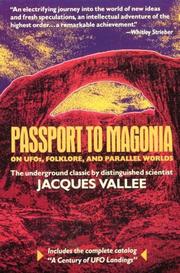
Passport to Magonia: from folklore to flying saucers
Places historical witness traditions into a broader interpretive context.
eBay marketplace picks
Marketplace Samples
Live-tested eBay searches with available results related to this page.
Selected fromUFO poster oneBay.co.uk.


Endnotes
1.
Source: edmondlifeandleisure.com
Title: Edmond Underground: in ‘65 Edmond abuzz with UCO sightings
Link:https://edmondlifeandleisure.com/edmond-underground-in-edmond-abuzz-with-uco-sightings-p10350-87.htm
2.
Source: koco.com
Title: Oklahoma has decades-long history with UAP sightings
Link:https://www.koco.com/article/oklahoma-ufo-history-unidentified-anomalous-phenomena-sightings/45347432
Source snippet
Oklahoma has decades-long history with UAP sightings...
3.
Source: edmondlifeandleisure.com
Title: Remembering a man who investigated the unusual
Link:https://edmondlifeandleisure.com/remembering-a-man-who-investigated-the-unusual-p19337-76.htm
4.
Source: iapsop.com
Title: Interplanetary Intelligence Report [IAPSOP]
Link:https://iapsop.com/archive/materials/interplanetary_intelligence_report
5.
Source: nicap.org
Link:https://www.nicap.org/waves/CarterSightingRptOct1969.pdf
6.
Source: edmondlifeandleisure.com
Title: tulsa paperboy made ufo history in p10411 87
Link:https://edmondlifeandleisure.com/tulsa-paperboy-made-ufo-history-in-p10411-87.htm
Source snippet
Tulsa paperboy made UFO history in 1965...
7.
Source: archives.gov
Title: National Archives Do Records Show Proof of UFOs? | National Archives
Link:https://www.archives.gov/news/articles/do-records-show-proof-of-ufos
8.
Source: iapsop.com
Title: skylook n41 apr 1971
Link:https://iapsop.com/archive/materials/mufon_ufo_journal/skylook_n41_apr_1971.pdf
9.
Source: iapsop.com
Link:https://iapsop.com/archive/materials/mufon_ufo_journal/skylook_n51_feb_1972.pdf
10.
Source: iapsop.com
Link:https://iapsop.com/archive/materials/mufon_ufo_journal/mufon_ufo_journal_n208_aug_1985.pdf
11.
Source: ia600600.us.archive.org
Title: 492780987 The UFO Book Encyclopedia of the Extraterrestrial PDFDrive
Link:https://ia600600.us.archive.org/32/items/492780987-the-ufo-book-encyclopedia-of-the-extraterrestrial-pdfdrive/492780987-The-UFO-Book-Encyclopedia-of-the-Extraterrestrial-PDFDrive.pdf
12.
Source: projectaquarius.mufon.com
Link:https://projectaquarius.mufon.com/private-research-collections/
Source snippet
Project AquariusPrivate Research CollectionsTo begin your research into the MUFON File cabinet, please click here. MUFON SAT Files... To...
13.
Source: youtube.com
Link:https://www.youtube.com/watch?v=oRReuDc94vQ
Additional References
14.
Source: youtube.com
Title: The Forgotten Pioneer of UFO Research: Hayden Hewes & the Rise of the IUFOB
Link:https://www.youtube.com/watch?v=kubEzrvagiM
Source snippet
CR Ep 144: Hayden Hewes Archive with Mindy Tautfest / Signs of the Times with Archbishop James Cloud...
15.
Source: youtube.com
Link:https://www.youtube.com/watch?v=aQRJy3hdXnY
Source snippet
Un-X News: Mindy Tautfest from NDE to UAP and UFO Bureau records...
16.
Source: youtube.com
Title: Audio Blog: Hayden Hewes and the International UFO Bureau
Link:https://www.youtube.com/watch?v=IW7h4Gy7psw
Source snippet
The Forgotten Pioneer of UFO Research: Hayden Hewes & the Rise of the IUFOB...
17.
Source: youtube.com
Title: Mindy Tautfest interview
Link:https://www.youtube.com/watch?v=PsBz3Z4bNFs
Source snippet
"Mindy Tautfest" "International UFO Bureau" MINDY TAUTFEST: Are UFOs and Near Death Experiences Related?...
18.
Source: podfollow.com
Link:https://podfollow.com/mysterious-radio/episode/527b1f8af158ae92cb0662eb23a6c42f54a138de/view
Source snippet
Hayden Hewes and the International UFO Bureau25 Jun 2025 — Hewes (December 29, 1943 – September 13, 2017) was a pioneering UFO researcher...
Published: December 29, 1943
19.
Source: academia.edu
Link:https://www.academia.edu/71337593/UFOs_and_the_extraterrestrial_contact_movement_a_bibliography
20.
Source: facebook.com
Link:https://www.facebook.com/courierpress/posts/at-least-as-of-now-the-most-infamous-evansville-area-ufo-incident-in-history-isn/1534862458650547/
21.
Source: internationalufobureau.com
Link:https://www.internationalufobureau.com/pastinvestigations
22.
Source: oklahomacitycremation.com
Link:https://www.oklahomacitycremation.com/obituaries/hayden-cooper-hewes
23.
Source: podmust.com
Link:https://podmust.com/ep/?epis=SGF5ZGVuIEhld2VzIGFuZCB0aGUgSW50ZXJuYXRpb25hbCBVRk8gQnVyZWF1&podcast=mysterious-radio