Within New Jersey UFOs
Why Fort Monmouth Changed Official UFO History
The 1951 Fort Monmouth reports mattered because military radar staff and aircrew helped revive the Air Force's UFO programme.
On this page
- The radar and aircrew reports
- How the Air Force responded
- What the surviving evidence proves

Page outline Jump by section
Introduction
The Fort Monmouth incidents of 10–11 September 1951 changed official UFO history more than they proved the existence of an extraordinary aircraft. Military radar trainees reported unusual targets, while two Air Force officers in a T-33 jet described a round, silver object near the New Jersey coast. Because Fort Monmouth was an Army centre for radar, communications and electronic research, reports from its personnel carried unusual institutional weight.
The subsequent Air Force investigation found that most of the observations could probably be explained by weather balloons, an ordinary aircraft, operator difficulty and possible unusual radar propagation. One radar return remained formally unresolved, but the surviving record offers no firm evidence that the visual and radar reports represented one coherent object. The case matters chiefly because the confusion surrounding its reporting exposed the weakness of the Air Force’s neglected UFO machinery and helped drive the reactivation of Project Grudge, which soon developed into Project Blue Book.[army.mil]army.milHistory Mystery from the Archives | Article | The United States ArmyHistory Mystery from the Archives | Article | The United States Army…
The radar and aircrew reports
Fort Monmouth was an especially significant setting for an apparent radar mystery. The installation and its associated laboratories had played an important part in American military electronics, including early aircraft-detection radar work. A report from inexperienced civilian witnesses might have received routine treatment; reports arising inside a military electronics establishment during the Korean War demanded closer attention.[fortmonmouthnj.com]fortmonmouthnj.comaircraft detection radar was developed here. In 1946, space communications was proved feasible when the Diana Radar was used to bounce…
The incident was not one clean, simultaneous radar-and-visual detection. It was a sequence of separate observations over two days, made with different equipment and under different circumstances. That distinction is crucial, because later retellings often compress the events into a single episode in which radar supposedly tracked the same disc chased by a jet.
At about 11.10 am on 10 September, a student using an AN/MPG-1 radar detected a low target roughly 12,000 yards south-east of Fort Monmouth. It appeared to move rapidly along the coast, changing azimuth much more noticeably than range. The operator could not keep it under the set’s aided tracking mode, which was normally capable of following contemporary jet aircraft, and inferred that the target must have been travelling at about 700 miles per hour. No permanent plotting record, instrument trace or technical log was preserved.[Wikimedia Commons]upload.wikimedia.orgWikimedia Commons…
Roughly 25 minutes later, two Air Force officers aboard a T-33 trainer were flying north from Dover Air Force Base towards Mitchel Air Force Base. From near Point Pleasant, the pilot saw what he believed was an object over Sandy Hook, apparently between 5,000 and 8,000 feet. He began a descending turn to intercept it. The second officer saw it about 45 seconds later, after which it seemed to turn near Freehold and head back towards the coast. They described it as round and silver, briefly appearing flat, and estimated its diameter at 30 to 50 feet. The T-33 descended from about 20,000 to 17,000 feet and accelerated, but the crew lost sight of the object as it appeared to cross the coastline.[Wikimedia Commons]upload.wikimedia.orgWikimedia Commons…
Further radar observations followed. At about 3.15 pm on 10 September, radar tracked a very high target later identified as a balloon. On 11 September, another return at about 10.50 am was likewise attributed to a weather balloon. A later return, recorded at approximately 1.30 pm that day, was not conclusively identified. Investigators considered anomalous propagation — the bending of radar energy by unusual atmospheric conditions — and heightened expectations among the students as possible causes.[Wikimedia Commons]upload.wikimedia.orgWikimedia Commons…
This chronology weakens the popular impression of independent sensors confirming one fast, structured craft. The first radar observation preceded the T-33 sighting, and the official record did not establish that the radar target and the object seen from the aircraft occupied the same position. The later radar contacts occurred hours apart or on the following day. They form a case family connected by place and timing, not a documented continuous track.
How the Air Force responded
The reports reached the Air Technical Intelligence Center at Wright-Patterson Air Force Base, where responsibility for investigating unusual aerial observations had survived in a diminished and disorganised form after the earlier Project Grudge was wound down. Military reporting rules already required information about “unconventional aircraft” to pass through intelligence channels, and the T-33 crew and Fort Monmouth personnel supplied statements and summaries during the days after the incident. The pilots were formally questioned at Stewart Air Force Base on 17 September.[NICAP]nicap.orgMonmouth - A New Look…
The administrative handling was nearly as influential as the sightings themselves. According to later accounts, reports moved slowly through the military system, while details of the aircrew observation reached the press before senior Air Force intelligence officials had received a satisfactory briefing. That created an awkward situation: journalists were asking about a potentially important military encounter while the office nominally responsible for UFO investigations lacked a prompt, authoritative answer.[NICAP]nicap.orgMonmouth - A New Look…
Lieutenant Jerry Cummings and Lieutenant Colonel N. R. Rosengarten were sent to investigate at Fort Monmouth. Their material was subsequently examined by officers at the Air Technical Intelligence Center, including Lieutenant Henry Metscher and Edward Ruppelt, who would become the best-known early head of the Air Force UFO programme. The investigation compared witness statements, estimated flight paths, balloon launches, radar behaviour and local conditions rather than accepting the reports as a single unexplained encounter.[NICAP]nicap.orgMonmouth - A New Look…
High-level dissatisfaction with the state of the investigation extended beyond the final explanation of this particular case. Major General Charles Cabell, then the Air Force’s Director of Intelligence, was briefed on the Fort Monmouth events and demanded a more functional system for handling UFO reports. On 27 October 1951, Project Grudge was formally reactivated with staff, funding and a broader investigative policy. The programme was redesignated Project Blue Book in March 1952. National Archives records confirm both dates and preserve the resulting case files, organisational records and investigative reports.[National Archives]archives.govNational Archives Records of Headquarters United States Air Force (Air StaffNational Archives Records of Headquarters United States Air Force (Air Staff
It would be too simple, however, to say that Fort Monmouth alone created Project Blue Book. Ruppelt described a wider accumulation of military and civilian reports, concern among senior officers and dissatisfaction with earlier investigations. Fort Monmouth was the immediate, highly visible test case that demonstrated the need for reform, rather than the sole reason the Air Force renewed its interest.[Internet Sacred Text Archive]sacred-texts.comOpen source on sacred-texts.com.
The reorganised project adopted a more systematic principle: reports that could be reasonably identified would be closed, while genuinely unresolved cases would be retained as “unknowns” rather than forced into an explanation. Ruppelt also acknowledged an important limitation that Fort Monmouth had illustrated. Radar can measure an actual target’s position and movement, but it can also display weather-related or equipment-generated returns. Radar evidence is therefore strongest when supported by preserved instrument data, experienced operators and genuinely simultaneous visual observations.[Internet Sacred Text Archive]sacred-texts.comOpen source on sacred-texts.com.
Why balloons became the leading explanation
The strongest ordinary explanation for the T-33 sighting was unusually well matched in time and place. At approximately 11.12 am, about 23 minutes before the pilots’ reported observation, Evans Signal Laboratory released two silver-painted balloons designed to be tracked by radar. They expanded as they rose and, according to experienced balloon observers consulted by the Air Force, could appear disc-shaped from some viewing angles. Investigators calculated that by 11.35 am they would have been near 18,000 feet and approximately along the line of sight between the T-33, Point Pleasant and Sandy Hook.[Wikimedia Commons]upload.wikimedia.orgWikimedia Commons…
The balloon hypothesis also addressed the apparently remarkable size and speed. The pilots assumed that the object was several miles away over Sandy Hook. A much smaller balloon closer to the aircraft could occupy the same apparent angle in the sky and therefore seem much larger. As the fast-moving T-33 turned and descended around a slowly drifting balloon, relative motion could make the balloon appear to accelerate, reverse direction or perform a turn of its own.[Wikimedia Commons]upload.wikimedia.orgWikimedia Commons…
There were nevertheless imperfections in the reconstruction. The pilots initially placed the object well below the calculated balloon altitude, and the official special report admitted that not all reported details fitted neatly. The object’s apparent initial descent was not explained, only one of the two balloons was reported, and the aircrew supplied somewhat different ground tracks during two interrogations. Because investigators had to assume parts of the T-33’s course, the report stopped short of calling the balloon identification certain.[Wikimedia Commons]upload.wikimedia.orgWikimedia Commons…
The wording of the final finding reflected that caution: the object was “probably” a balloon, not conclusively proved to be one. Ruppelt’s later popular account was more confident, saying that Metscher’s reconstruction had shown how the officers could have mistaken a balloon for a fast-moving object. That difference illustrates why the contemporary technical report is more valuable than simplified later summaries: it records both the plausibility of the explanation and the residual inconsistencies.[Wikimedia Commons]upload.wikimedia.orgWikimedia Commons…
What happened to the radar mystery
The first radar return acquired its extraordinary speed through inference rather than a measured track. The student operator believed that failure to engage aided tracking meant the target must have exceeded the system’s normal tracking capability. Yet his own reported observation time and estimated path implied a speed nearer 400 miles per hour, compatible with a conventional aircraft. Investigators concluded that excitement and difficulty with the tracking procedure were more likely explanations than a 700-mile-per-hour object.[Wikimedia Commons]upload.wikimedia.orgWikimedia Commons…
The operator was more experienced than the average student, but he was demonstrating the equipment before visiting officers and became frustrated when he could not hold the target. The official report also stressed that those involved were maintenance students rather than trained operational radar controllers. Their course involved diagnosing deliberately introduced mechanical or electronic faults, and no logs, plots or raw records were retained. Those limitations do not mean that nothing appeared on the screen; they mean that the return’s speed, altitude and identity cannot now be independently reconstructed.[Wikimedia Commons]upload.wikimedia.orgWikimedia Commons…
Two other radar observations were identified as balloons. One involved a balloon whose altitude was being checked after officers reportedly made a wager about how high it had risen. The 11 September afternoon return remained formally unknown, although investigators considered atmospheric effects and the students’ expectation that unusual objects were active nearby. In other words, “unknown” marked insufficient evidence, not proof of an exotic vehicle.[Wikimedia Commons]upload.wikimedia.orgWikimedia Commons…
The official conclusions therefore divided the supposed wave into separate causes:
- the T-33 visual report was probably a balloon;
- the first fast radar target was not demonstrated to be exceptionally fast and was later treated as a conventional aircraft or operator-tracking problem;
- two subsequent radar contacts were weather balloons;
- the final 11 September return remained unresolved, with anomalous propagation and observer expectation regarded as plausible possibilities.[Wikimedia Commons]upload.wikimedia.orgWikimedia Commons…
This is less dramatic than the familiar story of a disc simultaneously seen and tracked by military specialists. It is also more historically useful. Fort Monmouth shows how several ordinary or weakly documented observations can reinforce one another when they occur close together, creating a stronger narrative than any individual report supports.
What the surviving evidence proves
The case is unusually well documented by the standards of early UFO history. A declassified Project Grudge special report preserves the aircrew account, balloon information, radar summaries, investigative reasoning and final conclusions. National Archives holdings also establish the institutional sequence from Project Sign through Grudge to Blue Book. The core incident is therefore not a later legend invented without official records.[Wikimedia Commons]upload.wikimedia.orgWikimedia Commons…
The documents securely establish that military personnel reported puzzling observations and that senior officials treated the reporting failure seriously. They also show that the Air Force did not simply dismiss the matter without examination. Investigators interviewed witnesses, compared separate statements, checked balloon releases, reconstructed geometry and distinguished between individual radar events. The resulting explanations were evidence-based, although constrained by missing logs and uncertain witness estimates.[Wikimedia Commons]upload.wikimedia.orgWikimedia Commons…
What the records do not establish is equally important. There is no surviving radar plot demonstrating impossible acceleration, no photograph, no recovered material and no verified continuous correlation between the T-33 sighting and a radar target. The object’s size, altitude and speed were visual estimates dependent on an assumed distance. The radar operator’s headline speed was likewise inferred from difficulty using the equipment rather than calculated from a reliable recorded track.
Later investigation therefore weakened the claim that Fort Monmouth witnessed a single extraordinary craft. It strengthened the balloon explanation for the aircrew sighting and identified most radar contacts in ordinary terms. Yet it did not reduce the case to a hoax or fabrication. The witnesses appear to have reported what they believed they saw, while incomplete measurements left room for disagreement over the exact reconstruction.
Within New Jersey’s UFO history, Fort Monmouth remains a landmark because of its consequences rather than its unresolved residue. The incident showed that reports involving radar and military aircrew could reach the press before the Air Force possessed an organised investigative response. The solution was not official confirmation of an unknown technology, but a revived programme intended to gather better data, investigate reports more consistently and separate genuine unknowns from balloons, aircraft, weather effects and human error.[army.mil]army.milHistory Mystery from the Archives | Article | The United States ArmyHistory Mystery from the Archives | Article | The United States Army…
Amazon book picks
Further Reading
Books and field guides related to Why Fort Monmouth Changed Official UFO History. Use these as the next step if you want deeper reading beyond the article.
The Report on Unidentified Flying Objects
Covers the era and official response surrounding Fort Monmouth.
UFOs: Generals, Pilots, and Government Officials Go on the Re...
Military witness perspective fits the topic.
The Demon-Haunted World
Rating: 4.5/5 from 43 Google Books ratings
Explains critical evaluation of extraordinary reports.
The Demon-Haunted World: Science as a Candle in the Dark
Rating: 4.5/5 from 43 Google Books ratings
Helps interpret evidence and uncertainty.
eBay marketplace picks
Marketplace Samples
Live-tested eBay searches with available results related to this page.
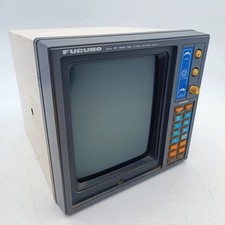
Selected fromradar display model oneBay.co.uk.

Endnotes
1.
Source: army.mil
Title: History Mystery from the Archives | Article | The United States Army
Link:https://www.army.mil/article/227612/history_mystery_from_the_archives
Source snippet
History Mystery from the Archives | Article | The United States Army...
2.
Source: archives.gov
Title: National Archives Records of Headquarters United States Air Force (Air Staff
Link:https://www.archives.gov/research/guide-fed-records/groups/341.html
3.
Source: fortmonmouthnj.com
Link:https://www.fortmonmouthnj.com/about-us/history/
Source snippet
aircraft detection radar was developed here. In 1946, space communications was proved feasible when the Diana Radar was used to bounce...
4.
Source: upload.wikimedia.org
Link:https://upload.wikimedia.org/wikipedia/commons/3/3b/Project_Blue_Book%2C_BBA-PBSR1-300.pdf
Source snippet
Wikimedia Commons...
5.
Source: nicap.org
Link:https://www.nicap.org/reports/monmouth3.htm
Source snippet
Monmouth - A New Look...
6.
Source: prologue.blogs.archives.gov
Link:https://prologue.blogs.archives.gov/2019/12/19/saucers-over-washington-the-history-of-project-blue-book/
7.
Source: archives.gov
Title: project blue book 50th anniversary
Link:https://www.archives.gov/news/articles/project-blue-book-50th-anniversary
Source snippet
Public Interest in UFOs Persists 50 Years After Project Blue...5 Dec 2019 — The Air Force's follow-on project, Grudge, evaluated 244 rep...
8.
Source: text-message.blogs.archives.gov
Link:https://text-message.blogs.archives.gov/2017/07/05/see-something-say-something-ufo-reporting-requirements-office-of-military-government-for-bavaria-germany-may-1948/
Published: may 1948
9.
Source: prologue.blogs.archives.gov
Title: ufos natural explanations
Link:https://prologue.blogs.archives.gov/2018/04/16/ufos-natural-explanations/
10.
Source: archives.gov
Title: Project BLUE BOOK
Link:https://www.archives.gov/research/military/air-force/ufos
11.
Source: ia800501.us.archive.org
Title: Edward J Ruppelt The Report on Unidentified Flying Objects
Link:https://ia800501.us.archive.org/20/items/FritjofCapraTheTurningPoint/Edward%20J%20Ruppelt%20-%20The%20Report%20on%20Unidentified%20Flying%20Objects.pdf
12.
Source: upload.wikimedia.org
Title: Project Blue Book report 1951 09 7010207 Monmouth NewJersey
Link:https://upload.wikimedia.org/wikipedia/commons/4/4c/Project_Blue_Book_report_-_1951-09-7010207-Monmouth-NewJersey.pdf
13.
Source: nicap.org
Link:https://www.nicap.org/reports/monis.htm
14.
Source: nicap.org
Link:https://www.nicap.org/bluebook/51-69.htm
15.
Source: nicap.org
Link:https://www.nicap.org/reports/monmouth.htm
16.
Source: nicap.org
Link:https://www.nicap.org/docs/NARA-PBB85-540-8.pdf
17.
Source: history.com
Title: ufo dogfight gorman us plane fargo
Link:https://www.history.com/articles/ufo-dogfight-gorman-us-plane-fargo
18.
Source: youtube.com
Title: Capt. Edward Ruppelt and the Fort Monmouth Investigation
Link:https://www.youtube.com/watch?v=hI4O7tvKN5k
Source snippet
"Edward Ruppelt - The Report on Unidentified Flying Objects (Audiobook)[https://www.youtube.com/watch?v=DNh7iHsx6g8..."](https://www.youtube.com/watch?v=DNh7iHsx6g8...")...
19.
Source: sacred-texts.com
Link:https://sacred-texts.com/ufo/rufo/rufo11.htm
20.
Source: Wikipedia
Title: Project Grudge
Link:https://en.wikipedia.org/wiki/Project_Grudge
21.
Source: Wikipedia
Title: Project Blue Book
Link:https://en.wikipedia.org/wiki/Project_Blue_Book
22.
Source: Wikipedia
Title: The Report on Unidentified Flying Objects
Link:https://en.wikipedia.org/wiki/The_Report_on_Unidentified_Flying_Objects
23.
Source: sacred-texts.com
Link:https://sacred-texts.com/ufo/rufo/rufo09.htm
24.
Source: media.nationalarchives.gov.uk
Link:https://media.nationalarchives.gov.uk/index.php/ufo-file-release-august-2009/
25.
Source: fortmonmouth.org
Link:https://www.fortmonmouth.org/history/
26.
Source: military-history.fandom.com
Title: Project Grudge
Link:https://military-history.fandom.com/wiki/Project_Grudge
Additional References
27.
Source: cia.gov
Link:https://www.cia.gov/readingroom/document/cia-rdp81r00560r000100010001-0
28.
Source: youtube.com
Link:https://www.youtube.com/watch?v=YC_wEWF5ceE
Source snippet
The History of Project Blue Book and J. Allen Hynek...
29.
Source: youtube.com
Title: Project Blue Book and the Era of Confusion
Link:https://www.youtube.com/watch?v=O-Fmax00XbA
Source snippet
Project Sign: The Air Force's Original UFO Investigation (1948)...
30.
Source: gutenberg.org
Link:https://www.gutenberg.org/ebooks/17346.txt.utf-8
31.
Source: facebook.com
Link:https://www.facebook.com/groups/RadarStationVeterans/posts/3460536387366129/
32.
Source: bsb-muenchen.de
Link:https://www.bsb-muenchen.de/mikro/lit340.pdf
33.
Source: jasoncolavito.com
Link:https://www.jasoncolavito.com/report-on-ufos.html
34.
Source: facebook.com
Link:https://www.facebook.com/NewsNationNow/posts/retired-meteorologist-jack-bushong-tracked-a-ufo-on-radar-and-says-it-hovered-an/302253108848380/
35.
Source: monmouthtimeline.org
Link:https://monmouthtimeline.org/timeline/the-defining-technology-of-world-war-ii-is-radar/
36.
Source: skepticalinquirer.org
Link:https://skepticalinquirer.org/wp-content/uploads/sites/29/2019/03/SI-JF-11.pdf